

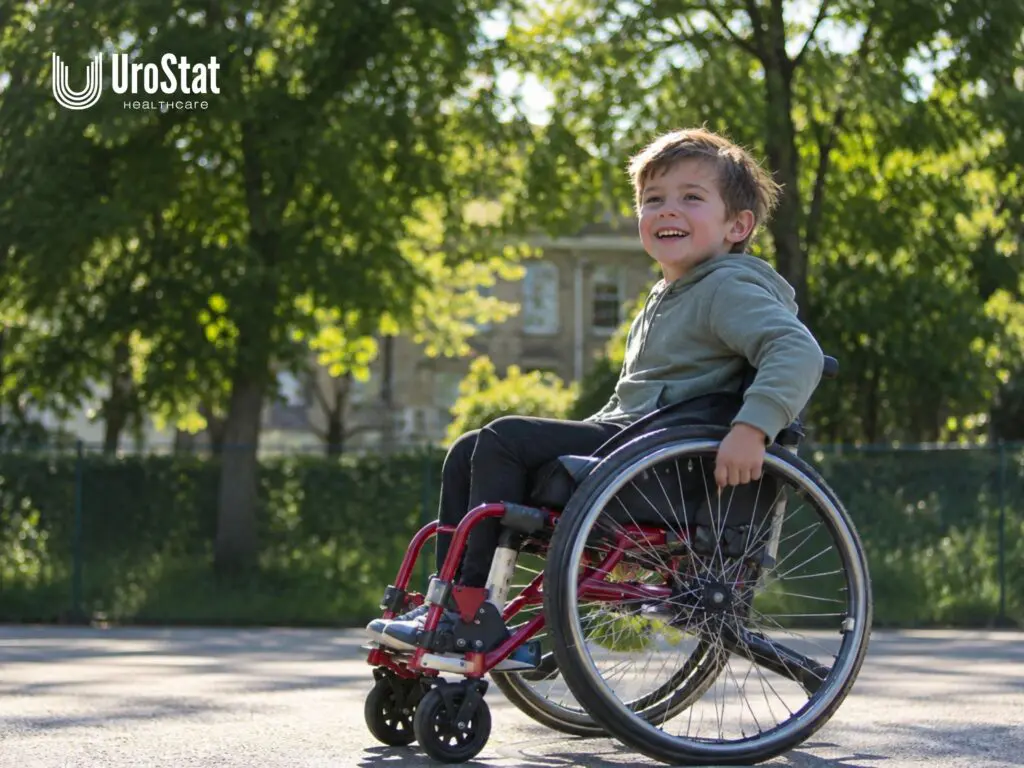
If you or someone you know has a child with spina bifida, catheters are likely a normal part of everyday life. And part of that rhythm includes managing supplies and making sure catheters are the right size and ready for use.
It can often feel as though clean intermittent catheterization is just one more thing on top of an ever-growing list of caregiving needs.
But once catheterization becomes a steady routine instead of a daily scramble, it does more than keep your child comfortable. It protects their kidneys and lowers their risk of infection.
Plus, it gives you both one less thing to think about every day.
At UroStat Healthcare, we strive to provide the best products and resources for families managing needs such as catheterization and incontinence in a variety of situations.
In recognition of Spina Bifida Awareness Month, we’re sharing practical guidance to help families manage everyday catheter care. Here’s why finding the right catheter matters and how to build a routine that supports your child’s needs.
Why Does My Child With Spina Bifida Need a Catheter?
Many children who have been diagnosed with spina bifida have what is called a neurogenic bladder. It’s a scientific-sounding term for something that each of us experiences every day. For most people, our body has nerves that tell the bladder when to hold urine and when to release it.
But for children affected by spina bifida, the bladder doesn’t always empty or signal the way it should. Catheterization steps in to do that job on a schedule, rather than relying on the body’s signals to urinate.
You may think that catheters are there to keep children dry. But there’s more to it than just comfort. According to the Spina Bifida Association, close to half of children with spina bifida can develop kidney damage over time without proper bladder management.
Regular catheterization relieves much of the pressure that can cause damage. It also lowers the risk of urinary tract infections. That’s why catheters are one of the most important tools available for protecting your child’s long-term health!
How Often Should Catheterization Happen?
The regularity of catheterization will vary depending on a child’s needs and a doctor’s recommendations. However, most children with spina bifida catheterize about four to six times a day, at a rate of roughly every four to six hours.
Your child’s urologist will set the exact schedule based on factors such as your child’s bladder capacity and how much they drink, so do not worry if another family’s routine looks a little different from yours.
What matters most is finding the right routine for your child and sticking to the schedule your child’s doctor recommends.
How to Build a Catheter Routine Around Everyday Moments
Sometimes a few tips can go a long way to building a successful routine. Use this as a planning guide but not a replacement for the schedule your child’s urologist recommends. The key is to choose the daily moments that fit your family’s routine, school day, and care plan.
| Everyday Routine Anchor | Routine Tip | Ideas for Caregivers |
| After waking up | Start the day’s catheterization routine before breakfast, getting dressed, or leaving the house. | Keep morning supplies in the same easy-to-reach place so there is less rushing. |
| Before leaving for school or activities | Confirm your child has what they need for the day, including backup supplies. | Do a quick “kit check” the night before to make mornings easier. |
| Around lunch or a scheduled school break | Coordinate the planned routine with the school nurse or trained staff member. | Make sure the school kit is labeled, stocked, and stored where the right person can access it. |
| After school or when arriving home | Build catheterization into the transition home, before homework, playtime, or errands. | Pair it with an existing habit, such as putting away a backpack or changing clothes. |
| Before bedtime | Complete the final planned routine as part of winding down for sleep. | Restock the go bag and set out what you need for the next morning. |
| Before trips, appointments, or longer outings | Pack a portable catheterization kit and check that it contains enough supplies. | Keep a short backup list in the bag so you can restock it quickly after each outing. |
Tips for Building a Catheterization Routine That Sticks
The best (and easiest) routines typically aren’t built around the clock.
Both children and adults who use catheters find that the best routine is one that’s built around the parts of the day that already happen naturally. These can include right after waking up, before lunch, after school, and before bed.
The key is anchoring catheterization to those moments. That takes much of the guesswork out of remembering, for you and your child as they grow and begin to notice the signals their bodies are giving them.
Keeping supplies prepped and portable helps relieve stress and tension.
When in doubt, always keep a small bag with everything your child needs, ready to grab on the way out the door.
Having a “go bag” for catheterization can help the entire process go from a production to a routine. The calmer and easier to manage you can keep the process, the more your child will follow your lead.
Remember: parents or guardians set the tone in the experience far more than they realize!
Partner with a team that can handle the details for you along the way.
Sometimes handing off part of the process is the key to unlocking success.
UroStat handles hassle-free, insurance-covered catheter deliveries on your schedule, so restocking never throws off the routine or gets confusing. Life happens, and having a bit of help along the way can make all the difference!
Still learning about the different catheter types? Want more tips on keeping your child comfortable during the process? Check out our guide to pediatric catheter types, comfort, and everyday use.
What About School?
As you can imagine, catheterization at school is completely normal. So it’s smart to keep it as just another part of the routine too, not a separate problem to solve.
The first step is to talk with your child’s school early about a plan. That could mean working directly with the school nurse or a staff member trained in how to aid children with a variety of medical needs.
Pack a labeled school day kit with backup supplies, and make sure everyone involved knows where it is and how to keep it stocked.
This means one less thing to worry about throughout the day, knowing that your child has all the support they need.
Do you know what supplies you will need and what your plan covers? See our parent’s guide to pediatric catheter supplies and coverage to learn more.
When Can My Child Start Self-Catheterizing?
This is a common question, but it’s one that requires an individualized answer. The truth is, there isn’t a single age at which a child is ready for self-catheterization.
Many children will start showing interest in handling it themselves, much like they would any other part of their routine. It’s a great way to help them learn more about their bodies and show independence and personal pride.
However, don’t feel pressured to see your child perform at a specific age. Your child’s own sense of readiness should set the pace, not a calendar. Lean on your care team for guidance on judging when to start.
Even when your child is catheterizing independently, it’s important to stay involved in the process.
UroStat Can Help
Each and every child deserves to feel comfortable, confident, and cared for. Their journey will be unique to them, and the key is to manage it all with patience and the proper support.
If you’re looking for that support, UroStat is here to help. We deliver insurance-covered catheter supplies right to your door, on a schedule that works for your family.
Want to learn more? Call 888-845-8698 or check your eligibility online today to find out what may be covered and how to get the process started for you and your family.
You care for them. We’ll take care of the rest.