


Managing urinary health can feel overwhelming at first, especially when catheters become part of your care plan. Whether you’re recovering from surgery, managing a chronic condition, caring for a loved one, knowing what to expect (and also what your options are) can make all the difference.
This guide walks you through essential tips for comfortable, confident catheter care for women, and explains the different types of female catheters. Keep reading to learn more about catheters for women.
What Makes Female Catheters Different?
One of the biggest differences between catheters for men and women is length. Because the female urethra is shorter, catheters designed for women are typically more compact and easier to use.
- Female catheters: Usually around 6 inches long
- Male catheters: Typically 16 inches long
That being said, not every female catheter is the same, and depending on your health needs, comfort level, and lifestyle, one type may work better than another.
Types of Catheters for Women
There’s no one-size-fits-all solution. Your healthcare provider will recommend the right type for your situation, but here’s a breakdown of the most common options:
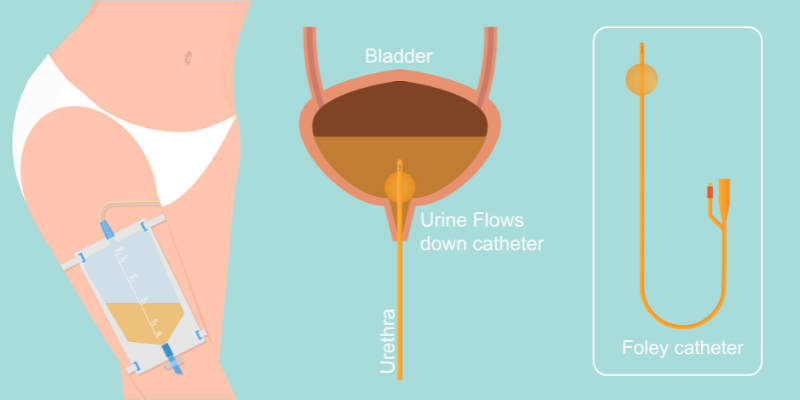
1. Indwelling Catheters (Foley Catheters)
- Inserted by a healthcare professional and left in place for continuous bladder drainage
- Held in place with a small balloon inside the bladder
- Connected to a drainage bag (leg or bedside)
- Commonly used after surgery, during hospital stays, or for long-term needs
These require regular cleaning and monitoring to prevent urinary tract infections (UTIs).
2. Intermittent Catheters
Intermittent catheters are inserted and removed multiple times a day, often by the user or caregiver. They’re ideal for women who can catheterize themselves or need periodic drainage.
Styles include:
- Straight Tip Catheters: Standard, uncoated single-use catheters
- Hydrophilic Catheters: Special coating that activates with water for smoother insertion
- Pre-Lubricated Catheters: Ready to use right out of the package
- Closed System Catheters: Self-contained and sterile, ideal for travel or reduced infection risk
- Compact/Travel-sized Catheters: Discreet, smaller options that fit in a purse or pocket
These give you more independence and are easy to carry on the go.
3. External Female Catheters (Urinary Pouches)
- Worn outside the body to collect urine
- Often used for patients with limited mobility or those who can’t tolerate internal catheters
- May be attached to absorbent products or external collection devices
These can help improve comfort and dignity for some users, especially during nighttime or home care.
4. Suprapubic Catheters
- Inserted surgically through the lower abdomen into the bladder
- Used when urethral catheterization isn’t possible or preferred
- Common in long-term care or post-surgical recovery
These require provider care but may offer increased comfort for certain users.
Pediatric Catheters
UroStat Healthcare also proudly supports children and teens who require catheterization, whether that’s due to spina bifida, neurogenic bladder, or post-surgical needs. We offer a wide range of pediatric catheter supplies from brands you can trust, including:
Common pediatric catheters we provide include:
- Pediatric closed system catheters
- Hydrophilic pediatric catheters
- Pre-lubricated pediatric catheters
- Straight uncoated pediatric catheters
We help families navigate Medicaid, Medicare, and commercial insurance, so kids get what they need without the stress. Currently serving pediatric patients in Georgia, Alabama, Mississippi, Ohio, and Kentucky.
Essential Tips for Catheter Care and Hygiene
Keeping your catheter clean and well-maintained helps prevent infections and improves comfort. Here’s what to keep in mind:
- Wash your hands before and after touching your catheter or bag
- Clean the area around the catheter every day with warm water and mild soap
- Empty the drainage bag regularly – never let it get too full
- Stay hydrated to flush your bladder out and help prevent UTIs
- Inspect your catheter site for signs of irritation, swelling, or discharge
- Follow your provider’s timeline for replacing or changing your catheter

When to Call Your Doctor
It’s important to reach out to your doctor if you notice the following:
- Pain, burning, or cramping
- Fever or chills
- Cloudy, foul-smelling urine
- Leaking around your catheter
- Blood in your urine
- Redness or swelling around the insertion site
- Signs of urinary tract infection (UTI)
Prompt care can prevent complications and keep you feeling your best.
UroStat Is Here to Support Your Catheter Care Needs
Catheter use can feel like a big adjustment, but you don’t have to figure it all out on your own. With the right information, compassionate care, and reliable supplies, managing your bladder health can become part of your routine (without stress!).
At UroStat Healthcare, we help patients across the country access the covered catheter supplies they need – delivered discreetly and handled with care.
Need help finding the right product or navigating your insurance coverage? Reach out to speak with a UroStat care specialist today. We’re here to answer your questions and simplify the process.