
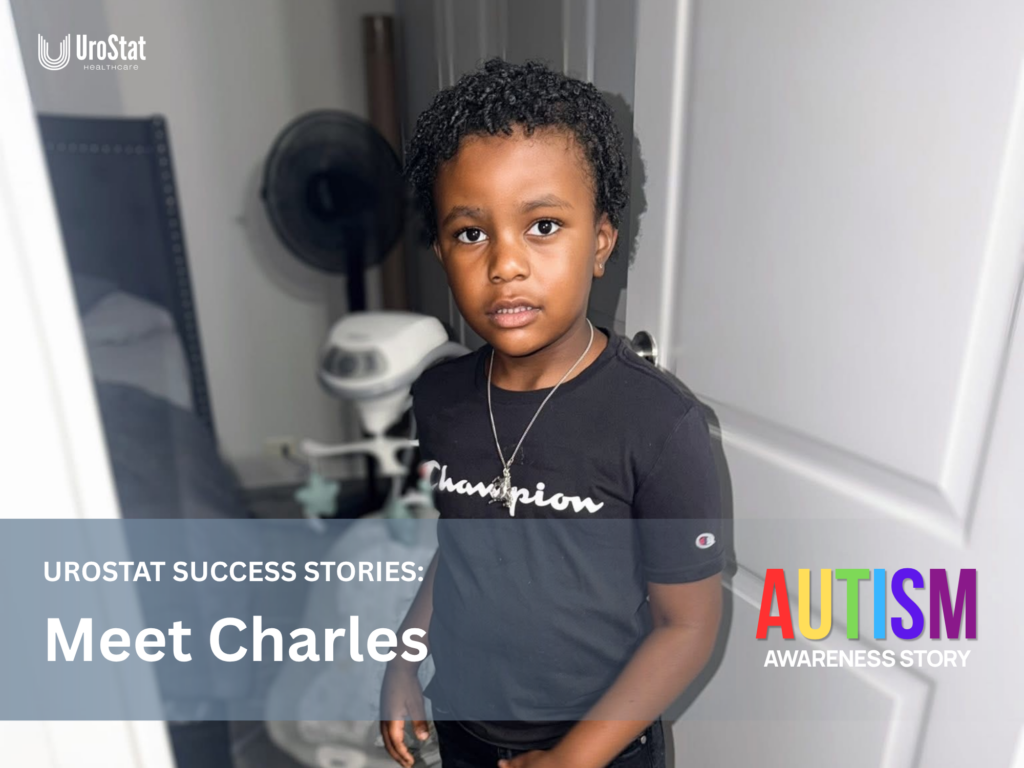
The following story is based on a story shared by Charles’ grandmother, Wendy, and has been edited for clarity and length.

A Grandmother’s Joy
“I am a grandparent who eagerly anticipated her first grandchild… not just the first grand, a boy. The son I never had,” Mrs. Wendy says.
When Charles A. Porter III was born on November 27, 2020, he brought a level of joy to his family that is hard to put into words. His grandmother describes that moment as one of the best days of her life, a moment filled with tears, gratitude, and overwhelming love. Seeing him for the first time, she remembers feeling like their family was complete. Everything about him felt like a gift, and in those early days, there was nothing but happiness and hope for the future.
“This small, adorable face, looking up at us as we wept with tears of joy… my heart melting in a way that words just can’t describe.” From the beginning, Charles seemed to be thriving. He appeared healthy, alert, and ahead in many ways, quickly reaching milestones that made everyone around him even more excited about what was to come.
Early Development and Subtle Changes
As Charles grew, he continued to develop in ways that impressed his family. He was holding his own bottle before one month old, walking by 10 months, and speaking in phrases before his first birthday. He could feed himself, eat from the table, and had already picked up on songs, often humming them throughout the day. By all appearances, he was progressing quickly and showing signs of strong early development.
But over time, small changes began to appear. They were not immediate or obvious at first, just subtle differences that slowly became more noticeable. His grandmother recalls moments where he would tense up while playing, making grunting sounds, or becoming deeply focused on spinning objects. He had a unique ability to spin anything, even items that were not designed to move that way. He also began climbing on tables, behavior that felt unusual but was not immediately alarming.
“At first, we didn’t think much about it,” she shared. Like many families, they brushed it off as part of normal toddler behavior. But gradually, those small changes began to shift into something that felt harder to ignore.
When Concern Turned Into Action
As time went on, Charles’ behavior continued to change. He began staring off into space for long periods, sometimes for 20 to 30 minutes at a time without blinking. He stopped responding when his name was called and no longer repeated words or engaged in the same way he once had. Eye contact became limited, and it started to feel like he was pulling away from interactions that had once come naturally.
“I started to feel like something was wrong,” his grandmother said. Trusting that instinct, she began researching autism and developmental delays, trying to understand what she was seeing. She spoke with his parents about her concerns, even though it was difficult for them to hear. Like many parents, they were not ready to accept that something might be wrong.
Eventually, even his pediatrician noted delays, which led the family to seek additional support. They reached out to an early intervention program called Babies Can’t Wait, which provides coordinated services for young children with special needs. After completing the process, Charles qualified for in-home services, which allowed him to begin receiving support in a familiar environment.
Early Intervention and Ongoing Uncertainty
Through the program, a specialist named Mrs. Debbie began working with Charles twice a week. She focused on speech and various developmental activities designed to help him engage and learn. While there were moments of progress, it was inconsistent. Some days he would respond, and other days it felt as though he did not recognize or acknowledge her presence at all.
“He would respond to some, but just wasn’t grasping much.” Even the specialist expressed concern, noting that something about his behavior did not seem typical. Still, the family remained hopeful and continued with services, doing everything they could to support him during this stage.
After about a year, Charles approached his third birthday and had to transition out of the in-home program and into Head Start. The change was difficult. Moving from a controlled home environment into a school setting brought new challenges and uncertainty, but the family believed it was necessary for his development.
Diagnosis and New Challenges
At Head Start, teachers began sharing concerns about his daily experiences. They noted that he was falling frequently and not eating during the day. Around this same time, Charles was referred for a formal evaluation and was diagnosed with Level 2 autism along with speech delays.
“Our hearts stopped,” his grandmother recalled. Even with that diagnosis, something still did not feel right. She continued to notice physical changes that went beyond what she expected from autism alone. His head appeared to be growing disproportionately, and he began struggling with basic functions like chewing food, often holding it in his mouth instead of swallowing.
He also began to show signs of difficulty with movement, walking, and navigating stairs. At times, it seemed like he could not see clearly, getting very close to faces as if trying to focus. He was losing weight, experiencing fevers, and developed a noticeable lump under his chin. Despite repeated visits to the pediatrician and requests for further testing, her concerns were dismissed.
“I just kept feeling like something was wrong.”
Fighting to Be Heard
Charles’ grandmother continued to advocate for him, taking him back and forth to the doctor and asking for imaging tests like an MRI or CT scan. She knew something had changed, and it did not feel like typical developmental delays. Still, she was told that it was related to autism and that therapy would help over time.
Even during emergency room visits, the family felt overlooked. They waited for hours without receiving meaningful evaluation or answers. Each visit ended with more frustration and the same unanswered questions.
Despite this, she did not stop pushing for answers. She trusted what she was seeing every day and refused to ignore it.
The Moment Everything Changed
One night, the situation became critical. Charles did not come into his grandparents’ room like he usually did. When his grandmother went to check on him, she found him in distress. He was barely breathing, had a high fever, and could not stand or support himself.
“I grabbed him and he was burning up… when I tried to stand him up, he fell down.”
She rushed him to the emergency room, knowing something was seriously wrong. After hours of waiting, a doctor finally evaluated him and immediately recognized that his condition was neurological. An MRI was ordered right away.
A Life-Changing Diagnosis
After the scan, the doctor returned with results that would change everything. He showed her an image of a normal brain and then compared it to Charles’.
“I remember saying, where is his brain?” she recalled, seeing a large dark area where there should have been structure.
The doctor then said the words no one was prepared to hear: “Charles has a large brain tumor.”
The family was immediately transported to Children’s Healthcare of Atlanta at Egleston for emergency care.
Surgery, Recovery, and Starting Over
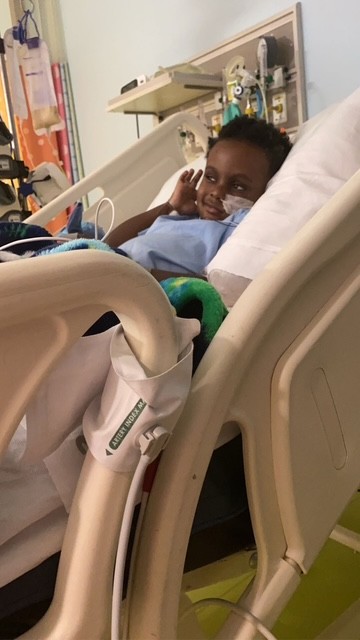
At the hospital, doctors confirmed that Charles had a large meningioma brain tumor. The size and condition required urgent treatment. After being stabilized with medication, he underwent a 12-hour surgery, followed by two additional surgeries due to the complexity and size of the tumor.
The experience was overwhelming, filled with fear, waiting, and constant prayer. Charles spent an extended time in intensive care, receiving around-the-clock support and therapy.
“He had to learn to eat, sit up, walk… everything all over.”
The surgeries changed his life in ways no one could have anticipated. Skills he once had were gone, and recovery became a long and ongoing process.
Where He Is Today
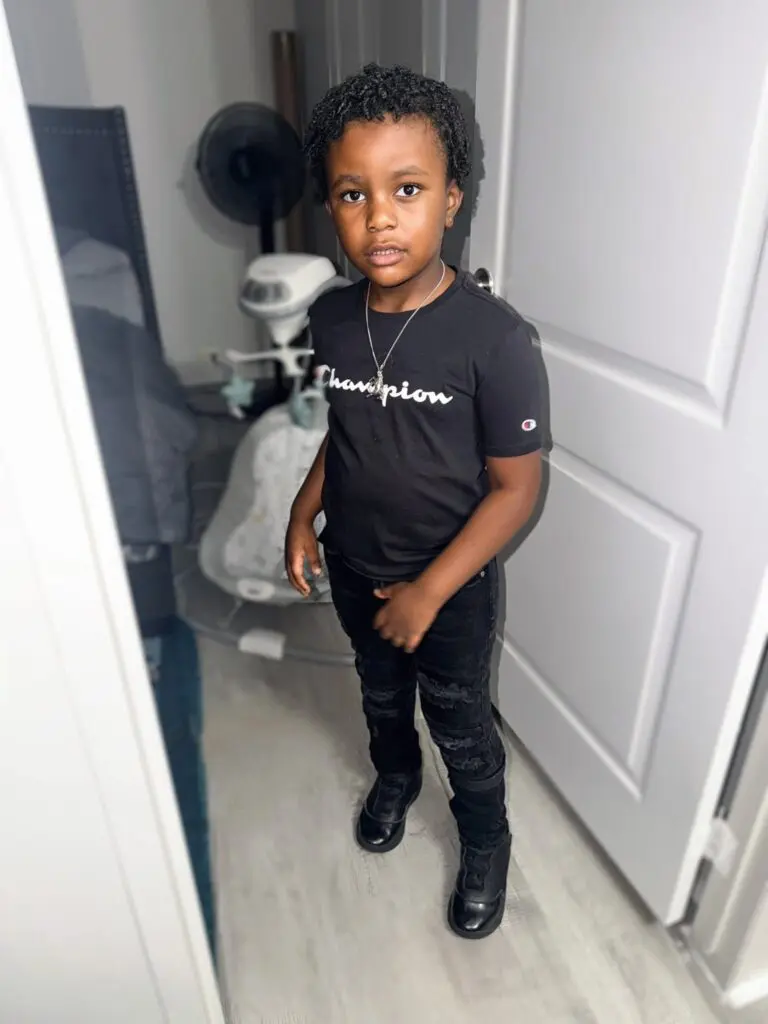
Today, Charles is five years old and continues to fight forward. He is able to walk, though with difficulty, and has regained the ability to eat. He is back in ABA therapy and continues working toward building skills and independence.
He remains nonverbal and continues to experience autism-related challenges, but his family remains committed to supporting him through every step of his journey.
“He’s our baby and we will continue to do anything and everything we can for him.”
Faith, Advocacy, and Moving Forward
Through every stage of this journey, one thing has remained constant for this family: faith. It has carried them through uncertainty, fear, and moments where they felt unheard.
“Our faith in God is what’s getting us through this ordeal.”
This experience has brought their family closer together and strengthened their commitment to advocating for Charles. His grandmother continues to emphasize the importance of trusting your instincts as a caregiver.
“We know our babies.”

A Story Still Being Written
Charles’ story is still unfolding, with more chapters ahead.
“There is just so much that has occurred with his journey that it would be a book of testimonies.”
For now, his family continues to stand by him, support him, and fight for him every single day. And through it all, they hold on to hope, faith, and the belief that his story is far from over.
Check Your Eligibility
If your child has been diagnosed with autism or developmental delays and still needs pull-ups or similar supplies, support may be available.
UroStat Healthcare helps families access these essentials through insurance or Medicaid, with monthly delivery and real people guiding you through the process.
Check your eligibility today and see what support your family may qualify for.